ServicesWater Softeners
Water Softeners in Brookfield
Hard water crusts up faucets, spots your glasses and lays scale inside the water heater. We pick a softener that fits how hard your water is and how many people use it, plumb it in with a bypass and a safe drain, and show you how to run it.
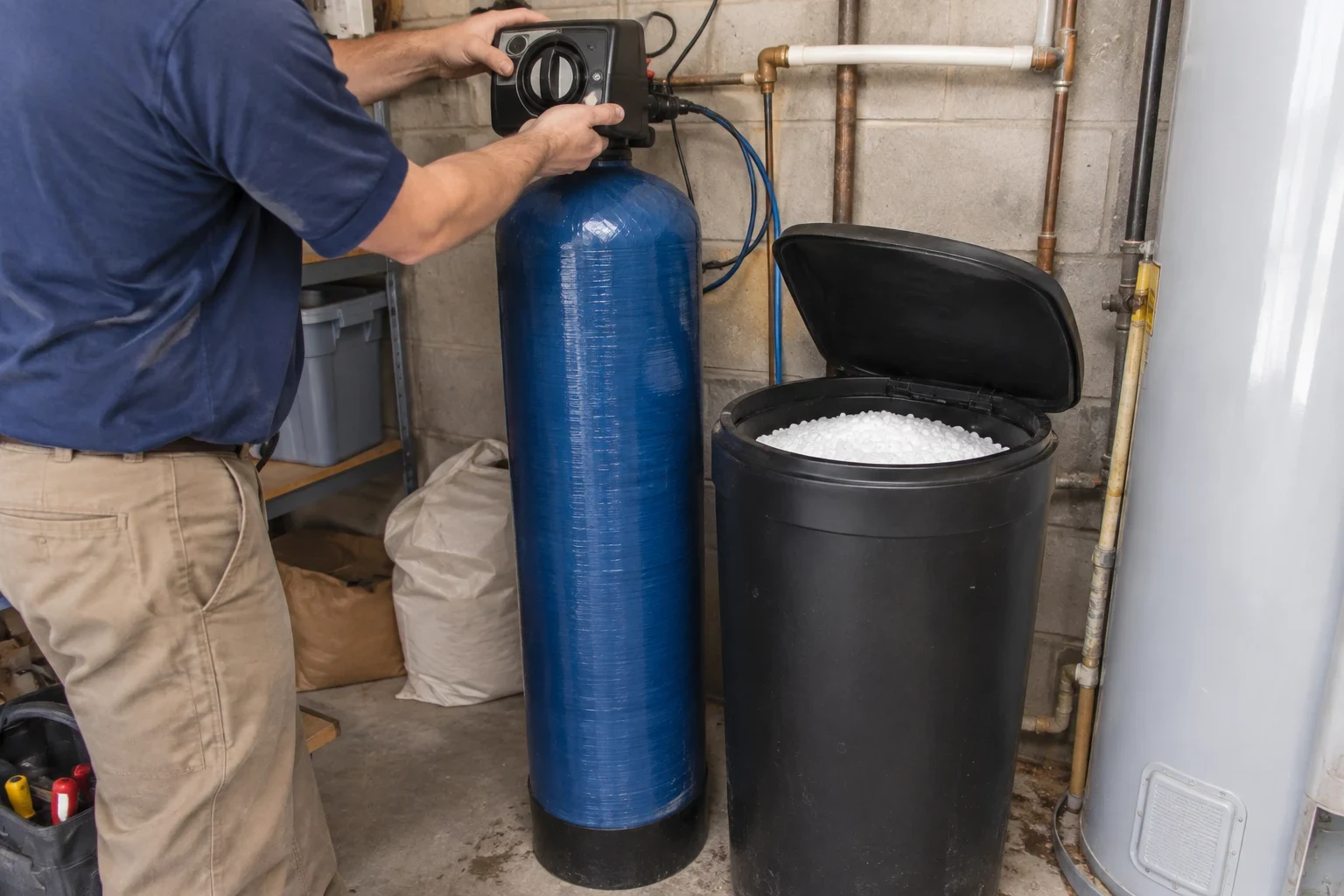
What a softener does, and when it makes sense
A softener trades out the calcium and magnesium in your water at the point where the main line enters the house, so every tap and appliance after it gets treated water. Those two minerals are behind the white crust on faucets, plugged showerheads and the layer that coats a water heater tank. With them gone, soap lathers easier and new scale stops forming.
A softener is the right call when hardness is the problem. It won't take out chlorine taste, lead or most other contaminants. If those are what bother you, our whole-home filtration and reverse osmosis pages cover that work. We'll give you a straight answer on what fits your home, even when it isn't a softener.
Most homes around Brookfield have a basement, and that's usually where the softener goes, near where the water line comes in.
What the install includes
Sizing to your home
We match the unit to your water's hardness, the number of people in the house and your daily use. Undersized, it runs out of soft water. Oversized, it burns through salt and water for nothing.
Bypass valve
Every softener gets a bypass. If the unit ever needs work, you flip it out of the line and the house still has water.
Code-correct drain line
Where the drain line empties, we leave an open air gap, so dirty water has no path back up into the unit. It's a small part, and it protects the water you drink.
Clean, safe setup
We place the brine tank where you can pour in salt without hoisting bags over pipes or wiring. The unit plugs into a grounded outlet, and cords stay up off wet floors.
Start-up and walk-through
We set the regeneration schedule, run one full cycle and point out the bypass, the salt level and the settings.
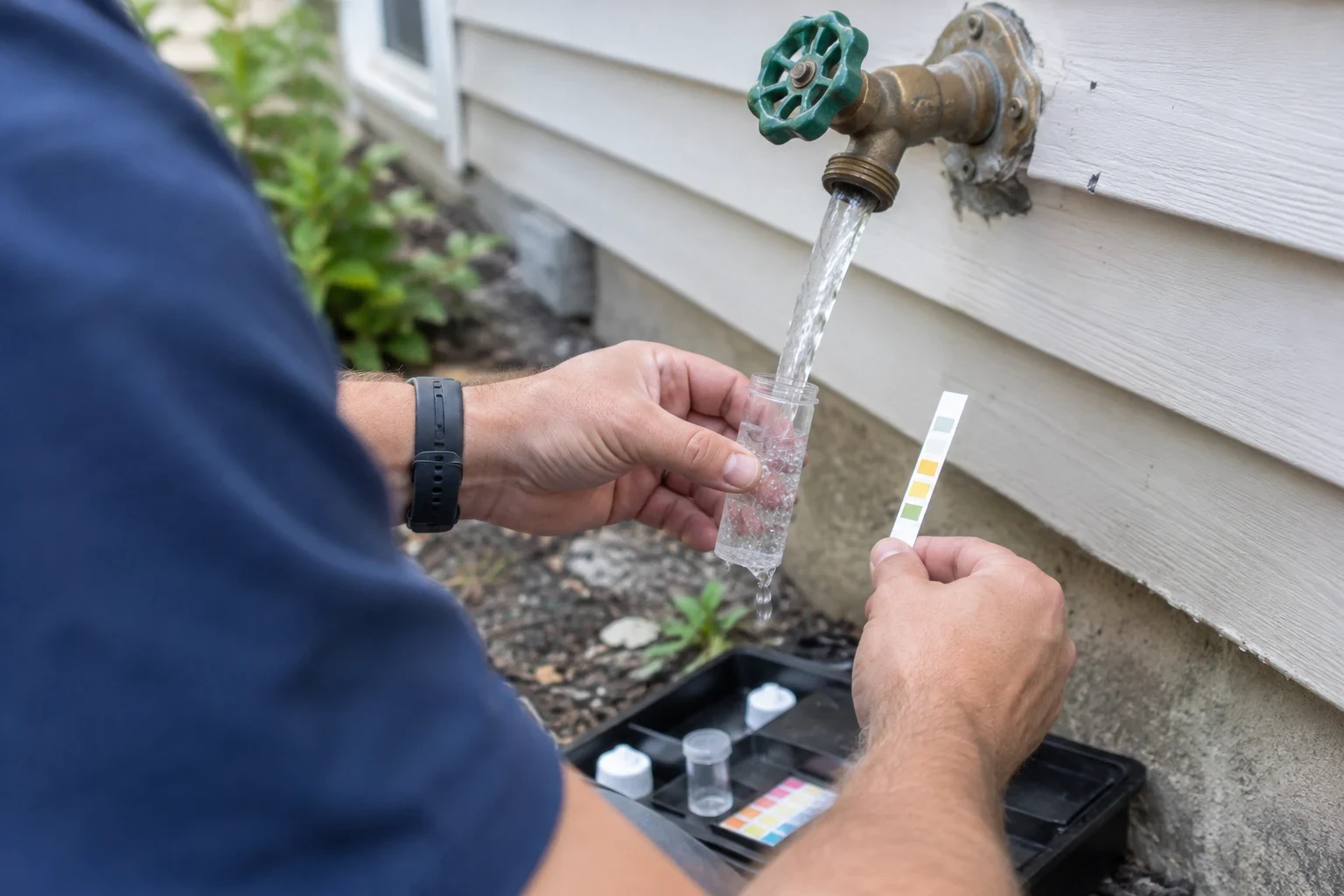
Signs your home needs a softener
- White crust on faucets
- Chalky buildup around faucet bases and showerheads is mineral scale. You scrub it off and it comes right back.
- Spotty dishes and glasses
- A cloudy film on glassware after a dishwasher run is a common hard water tell.
- Soap that won't lather
- Shampoo and soap never seem to rinse clean. Hard water reacts with soap and leaves a film on your skin and the tub.
- Water heater noise or short life
- Popping or rumbling from the tank usually means mineral scale is sitting on the bottom. The heater has to push heat through that layer, and it wears out sooner.
- An old softener that quit
- If your current unit eats salt fast, leaks or never seems to regenerate, it may be time for a new one.
How install day goes
- 1
Look first
We check where the main line comes in, where the drain and outlet are, and how much room there is. Then we explain where the unit should go and why.
- 2
Water off, floors covered
We shut off the main and drain the lines down before cutting any pipe. Drop cloths go down along our path and around the work area.
- 3
Plumb it in
We tie the softener into the main line with a bypass valve and run the drain line with an air gap. Every joint gets checked for leaks under full pressure.
- 4
Start it up
We load salt, set the timer for your household and run a regeneration so you can see it work.
- 5
Clean up and walk through
We haul away packaging and the old unit if there is one. You get a short tour of the bypass, salt and settings before we leave.
What moves the price
Every basement is set up a little differently, so we come look before we put a number on anything. Your quote comes in writing, with each part and each labor charge on its own line, and it's good for 30 days. Nothing is due until the softener is in and running, and then it's paid in full. If you'd rather pay over time, financing through U.S. Bank Avvance is available on approved credit.
- Unit size
- More people in the house or harder water means more capacity, and that takes a larger resin tank.
- Plumbing access
- A finished basement, a cramped corner or a main line sitting far from a drain all add time and extra pipe.
- Replacing an old unit
- Pulling out and hauling off an old softener is extra work. The old bypass and drain can sometimes stay, and sometimes they can't.
- Pipe material
- Copper, PEX and older galvanized lines each take their own fittings. Galvanized pipe close to the tie-in may have to be swapped out.
Water softener questions
- Does softened water add sodium to drinking water?
- Yes, a small amount. A salt-based softener swaps hardness minerals for sodium as the water passes through. If someone in your home watches their sodium, a reverse osmosis system at the kitchen sink pulls most of it back out. Ask us about it when you call.
- How often do I add salt?
- Salt use comes down to your water's hardness and how much water the house goes through. A good habit is to lift the brine tank lid once a month. If the salt is sitting low, pour in a bag or two. We'll point out the right fill level during the walk-through.
- Will a softener fix chlorine taste?
- No. A softener only deals with hardness minerals. Whole-home filtration is the right tool for chlorine taste and smell, and it can run alongside a softener.
- Can I change my mind after I sign?
- Yes. Once you sign, you have three business days to cancel. Before that, your quote holds for 30 days, so there's no rush to decide. Talk it over at home and call us back when you're ready.
- Do you install softeners for homes on a well?
- Yes, but well water often carries iron or other problems a softener can't handle by itself. Our well water treatment page covers that work, and we'll say so if your home needs more than a softener.
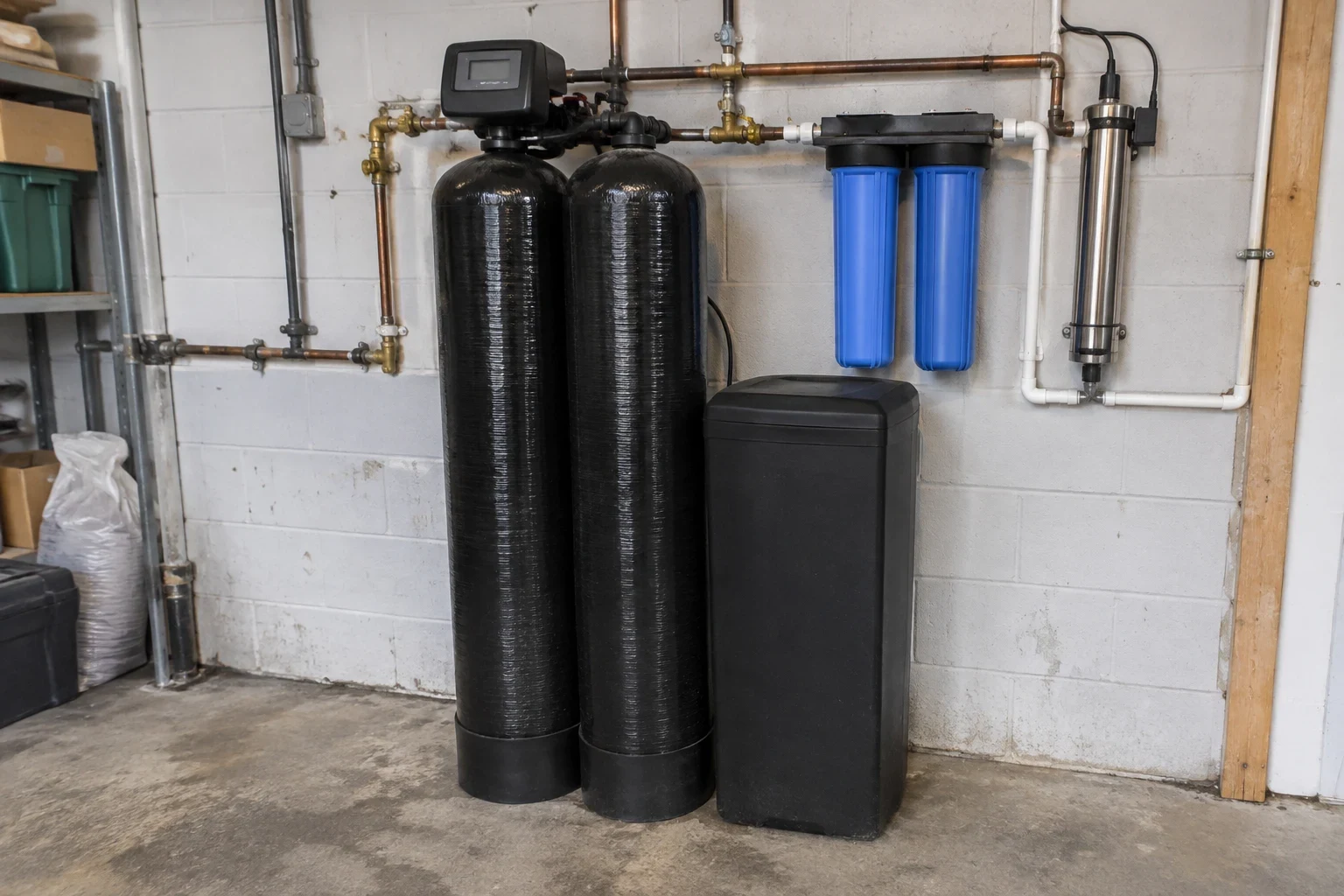
Ready to stop scrubbing scale?
Give us a call to get a free quote or learn how financing works. We will ask a few questions about your home and set up a time to come look.