ServicesWell Water Treatment
Well Water Treatment in Brookfield
Orange stains, a rotten-egg smell or gritty water usually point to something in your well we can treat. We match the equipment to what your water is doing, install it with the pump safely shut down, and leave clean, working water behind.
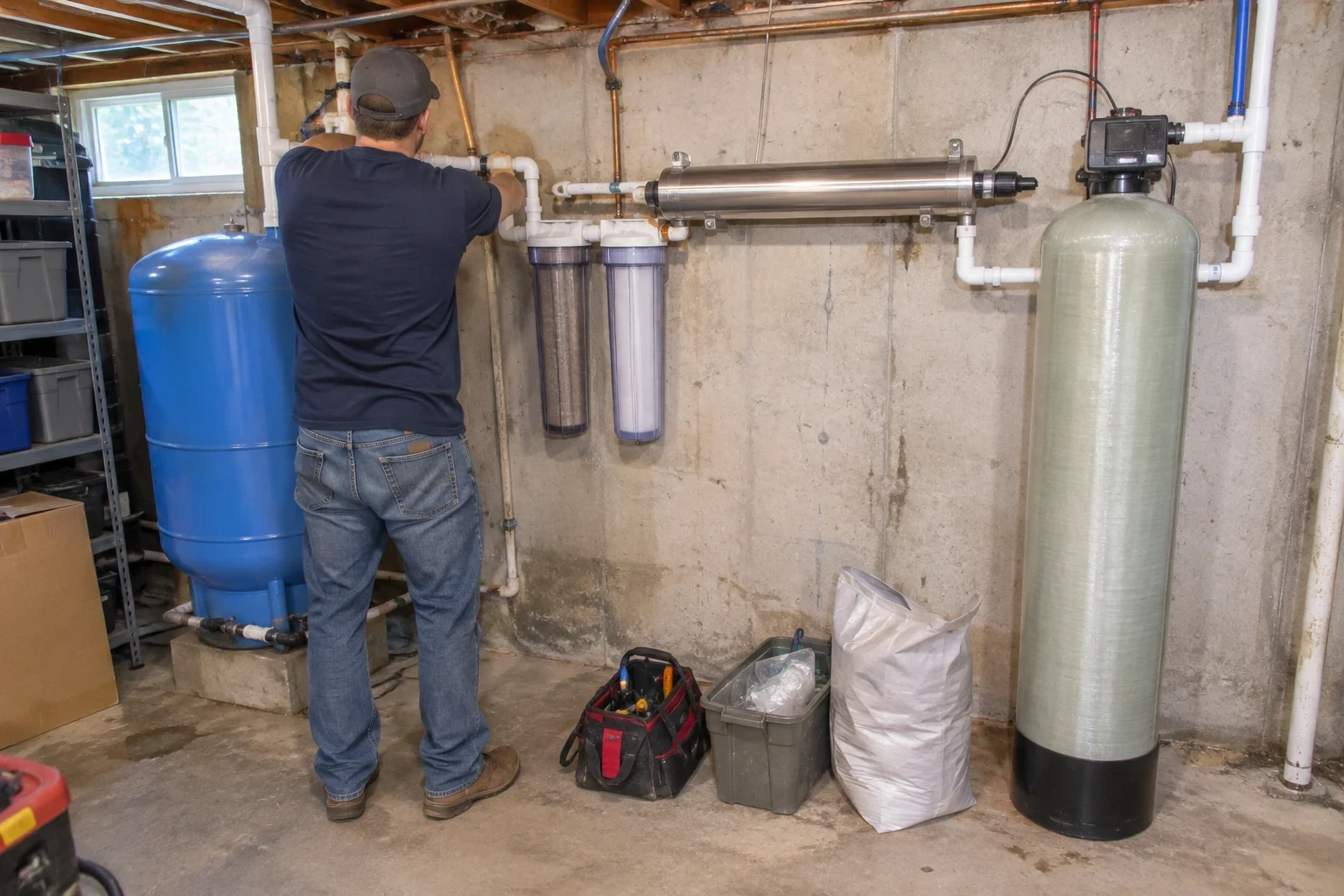
Treatment built around your well, not a catalog
A private well is your own small water system. Nobody upstream is treating it for you. Iron, manganese, hardness, sediment and sulfur gas are common in Wisconsin groundwater, and they show up in your sinks, laundry and water heater long before anyone calls a pro.
We look at the symptoms, the age of the well setup and how your home uses water. Then we explain which piece of equipment fixes which problem. Sometimes that's one sediment filter. Sometimes it's an iron filter followed by a softener. We don't stack on gear you don't need.
Safety comes first on every job. That means the pump breaker is off before we cut a pipe, the pressure tank is bled down, and every drain line has a proper air gap so treated waste never backs into your plumbing.
What a well treatment install includes
- Sediment filtration
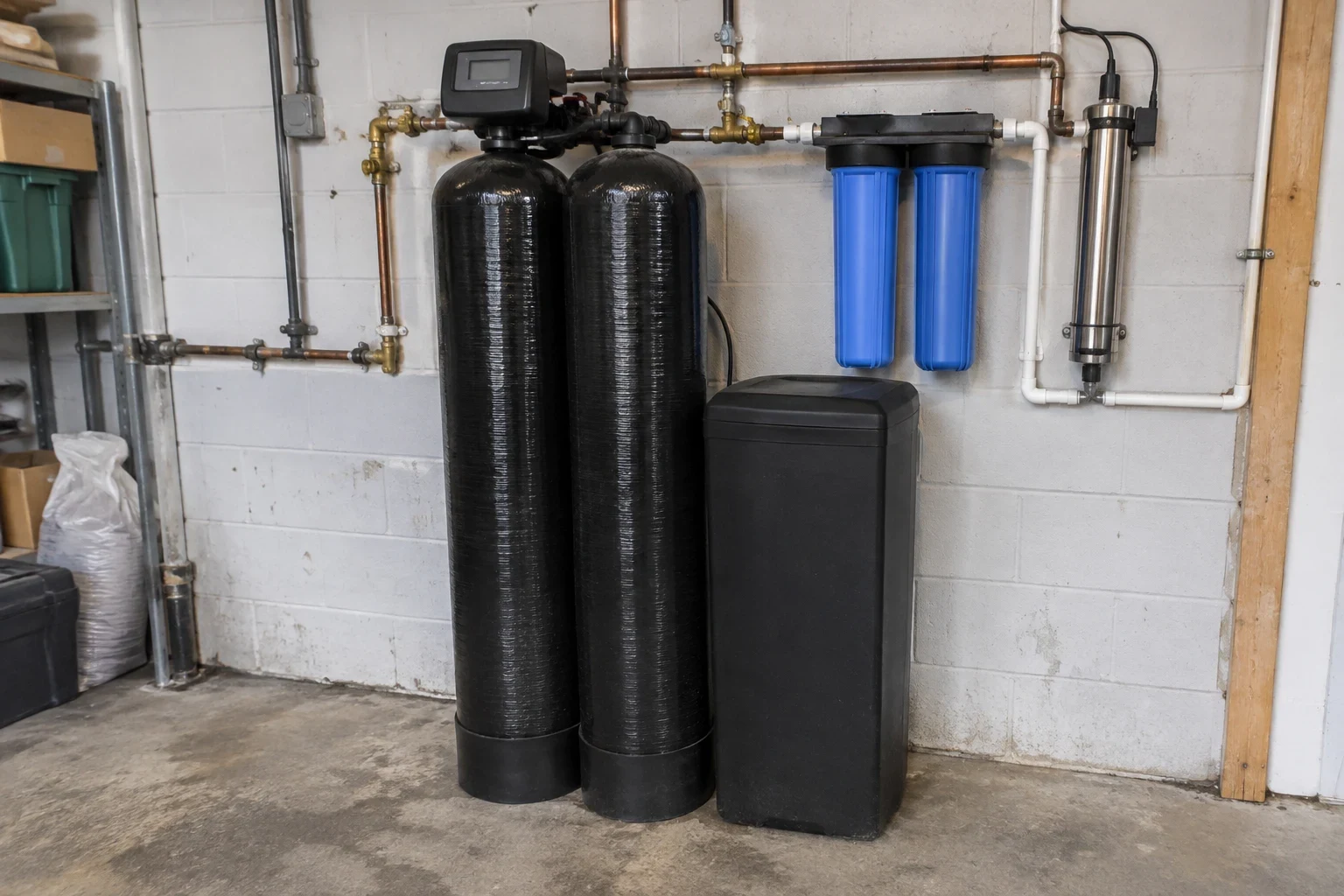
- A first-stage filter catches sand and grit coming up from the well. It protects every valve and fixture after it, including the treatment equipment we add next.
- Iron and sulfur removal
- An oxidizing iron filter pulls dissolved iron, manganese and that rotten-egg smell out of the water before it reaches your faucets. It backwashes itself on a schedule, so there's no cartridge to swap every few weeks.
- Softening where hardness calls for it
- Many wells here run hard. If yours does, we pair the iron filter with one of our water softeners so scale stops building in your water heater and on glass shower doors.
- UV disinfection option
- A UV lamp treats water as it flows through and adds no chemicals. We install it last in line, after the water is clear enough for the light to do its job.
- Bypass valves and clean drains
- Every system gets a bypass so you can keep water running if service is ever needed. Backwash lines go to a floor drain or laundry tub with an air gap, the way plumbing code expects.
Signs your well water needs treatment
Orange rings and yellowed laundry
Red-brown stains in the toilet, streaks down the tub and whites that come out of the wash looking dingy are classic iron problems. Bleach makes it worse by locking the stain into the fabric.
A smell like rotten eggs
That odor comes from hydrogen sulfide gas and is often strongest at the hot tap. It can also tarnish silverware and wear down metal fittings over time.
Grit in aerators and fill valves
Rinsing sand out of faucet screens or the washer inlet again and again means sediment is coming up from the well.
Crusty fixtures and worn-out appliances
White buildup on faucets and a water heater that pops or rumbles both point to hard water. Coffee makers and dishwashers often fail sooner than they should.
Black or purple spots
Manganese leaves dark marks on fixtures and can give water a faint dark tint. It usually travels with iron.
How the install day goes
- 1
Walk-through and plan
We look at your well equipment, pressure tank and where the water line enters your home. We confirm where each unit goes, where it drains and where it plugs in.
- 2
Safe shutdown
We switch off the pump at the breaker and drain pressure from the tank before any pipe is opened. Floors and the path to the basement get covered.
- 3
Plumbing and setup
We plumb in the bypass, the filters and any softener or UV unit in the right order. Each unit gets programmed for your water and household size.
- 4
Startup and flush
We bring the pump back on slowly, check every joint for leaks and run the first backwash. Water gets flushed through until it runs clear at the taps.
- 5
Walk you through it
We show you the bypass, the salt or media level and what normal sounds like. Old parts and packaging leave with us, and you pay once the install is finished.
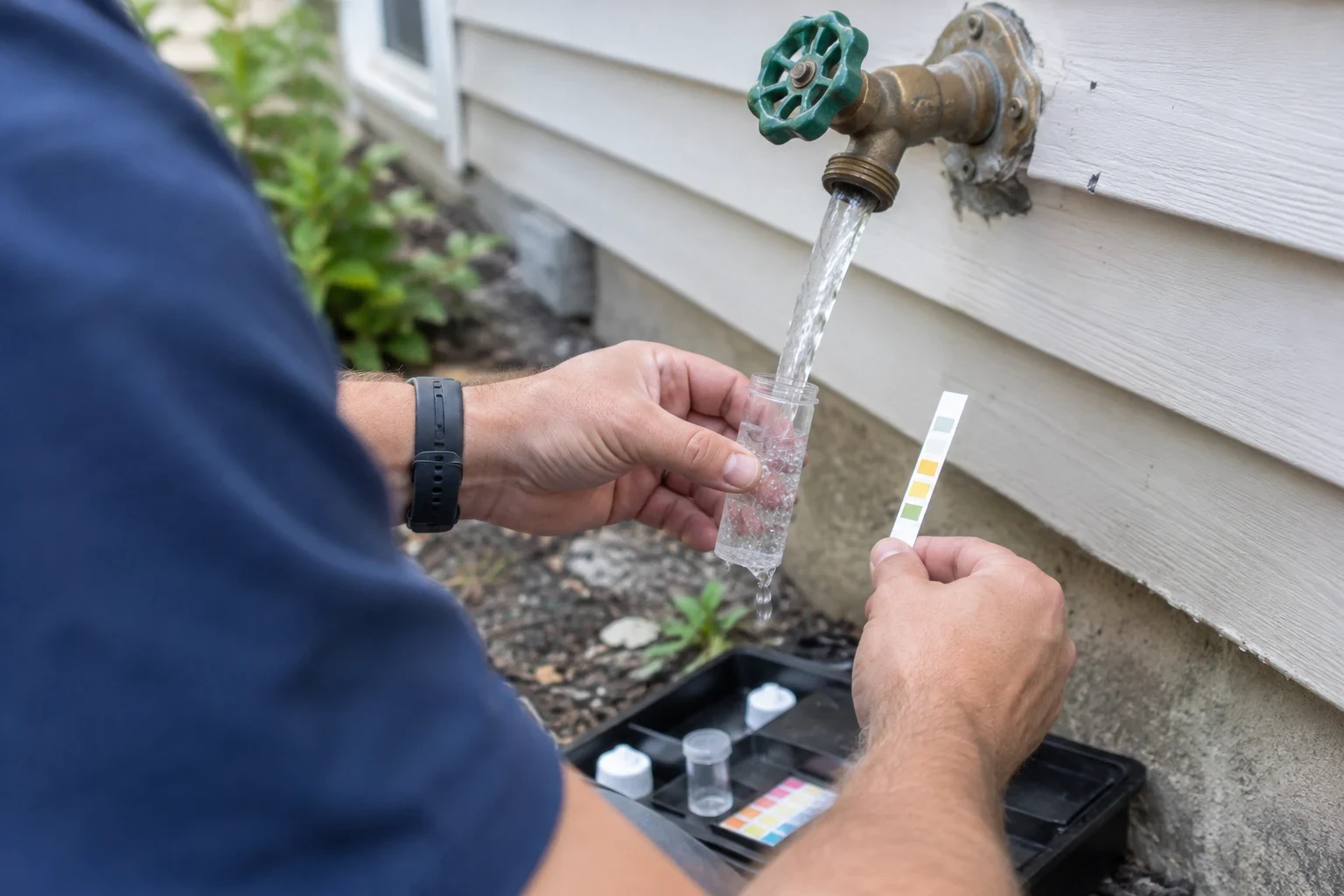
What sets the price of well treatment
No two wells are set up the same, so the price follows what your water needs and how your basement is laid out. You get a written quote with every piece of equipment listed on its own line. Your quote is good for 30 days. If you'd rather spread the cost out, U.S. Bank Avvance offers financing, on approved credit.
- How many problems you're treating
- Sand alone takes one filter. Iron, sulfur and hardness together take two or three stages, and each stage is its own unit.
- Iron level and flow rate
- More iron, or a pump that moves a lot of water, means a bigger filter tank and more media inside it.
- Space and drain access
- A cramped utility corner or a long run to the closest drain adds plumbing time. Moving an outlet for a UV lamp or control valve adds a bit more.
- Condition of existing pipes
- Corroded fittings around the pressure tank sometimes have to be replaced before new equipment can tie in safely. If we see that, we tell you before any work starts.
Common questions about treating well water
Something not covered here? (262) 924-3821
How long will we be without water on install day?
Most homes lose water for part of the day, not all of it. We plan the cut-in so the pump is off only while pipes are open. As soon as the bypass valve is plumbed in, your taps work again, even if we are still finishing the rest of the setup.
Does my well need both an iron filter and a softener?
It depends on your water. A softener handles a little iron, but a lot of iron coats the resin bed and shortens its life. If your well has iron and hardness, we put the iron filter ahead of the softener so the softener keeps working longer.
How is this different from whole-home filtration?
There is some overlap. Our whole-home filtration work is mostly carbon systems for taste and smell. Well treatment goes further, with sediment control, iron and sulfur removal, and UV options that a private well often calls for.
Can a drinking water system go in later?
Sure. A reverse osmosis unit under the kitchen sink works well alongside a well treatment setup. Let us know early if you might want one, and we will plan the layout with space for it.
When do I pay, and can I back out?
Payment is due in full when the install is done, not up front. Monthly payments are available through U.S. Bank Avvance financing, on approved credit. Once you sign, you can still cancel within three business days.
Get clear water from your well
Tell us what you're seeing at the tap and we'll talk through options. We can go over financing on the same call.